 ClutchPoints
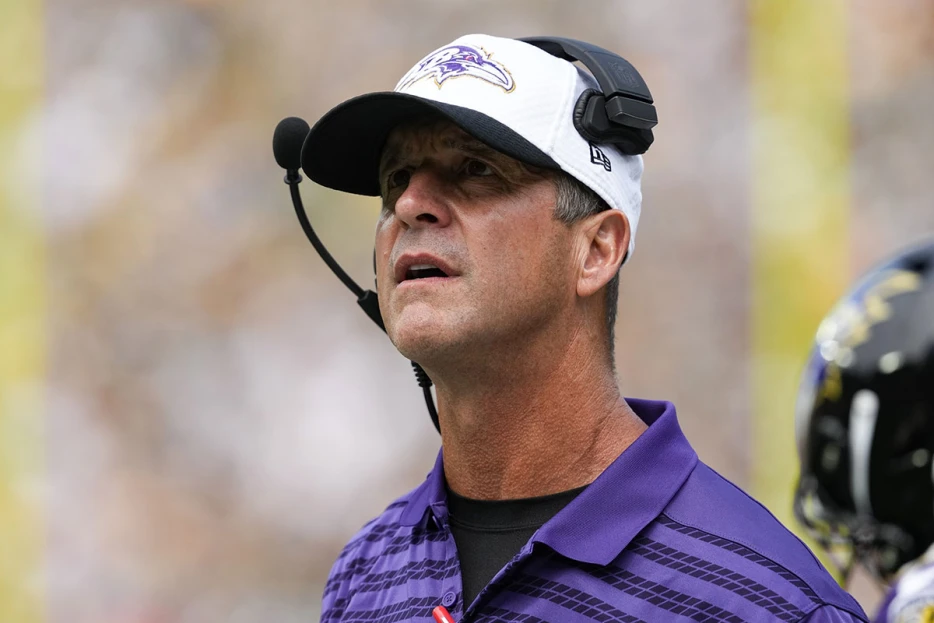
The Baltimore Ravens’ decision to move on from John Harbaugh is being framed as a bold recalibration. In reality, it reflects something far more troubling, with impatience outweighing evidence. Baltimore did not step away from failure—it walked away from one of the NFL’s safest bets.
When the Ravens parted ways with Harbaugh, the decision did not stem from organizational decay or sustained failure. It grew out of internal disagreement and philosophical friction. That distinction matters. Great franchises do not dismantle proven leadership over staff disputes. They resolve them. They understand that stability, once lost, is almost impossible to recover.
Harbaugh did not merely coach the Ravens. He defined them.
Across 18 seasons, he produced 13 winning seasons and 12 postseason appearances in a league structurally designed to prevent sustained success. Parity is the NFL’s central mechanism, yet Harbaugh consistently outpaced it. Entering his final season, he ranked 12th all-time in career wins. His 180 victories exceeded the next closest Ravens coach by exactly 100. That gap is not marginal—it is historical separation.
Since 2008, Baltimore ranks in fourth place for the most wins in the NFL, trailing only the New England Patriots, Pittsburgh Steelers, and Green Bay Packers. That context reframes this coaching decision as far more than a routine reset. It was a voluntary exit from the league’s most exclusive tier of consistency.
What truly separated Harbaugh was adaptability. Most coaches are system-dependent, locked into philosophies that expire with roster changes. The Ravens head coach was system-agnostic. He won early with a defense-first identity and a conventional passing offense. Then, without hesitation, he tore it down and rebuilt the entire organization around Lamar Jackson. That transformation produced two MVP seasons and kept Baltimore firmly in contention.
Few coaches successfully bridge eras. Fewer still thrive in both.
The next staff will inherit that reality immediately. There is no grace period and no developmental runway. Jackson is in his prime, and prime windows do not pause for philosophical experimentation. Alignment must be instant, and expectations will be unforgiving.
History offers clear warnings. The Philadelphia Eagles dismissed Andy Reid after a perceived downturn, only to watch the Kansas City Chiefs reap a decade of dominance. Similar patterns followed with Tom Coughlin, who was dismissed by the Jacksonville Jaguars only to deliver two Super Bowl titles to the New York Giants. Proven coaches rarely fail, they just go and succeed somewhere else.
Even during down seasons, Harbaugh never lost the locker room. Player buy-in remained intact. Accountability never wavered. His teams did not collapse, they competed. Baltimore consistently ranked among the league’s best in margin of defeat, meaning even losses were disciplined, controlled, and narrow.
That resilience became the foundation of Baltimore’s organizational identity.
Under Harbaugh, the team finished with a top-five scoring defense in ten separate times. Home-field advantage followed. M&T Bank Stadium evolved into one of the NFL’s most punishing environments, not because of mystique, but because of preparation and identity.
By moving on, the Ravens traded certainty for possibility. That...