 Big Blue View
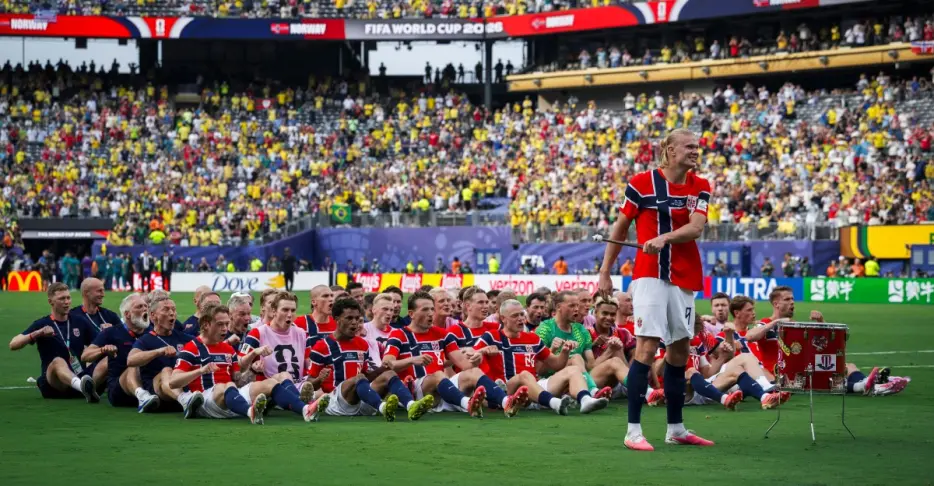
It had to be galling to New York Giants (and Jets) fans when MetLife Stadium was announced as one of the venues for the 2026 World Cup. Not because fans are protective of their beautiful stadium (which MetLife most certainly is not), but because soccer’s governing body FIFA requires that all matches be played on a grass pitch rather than artificial turf.
Giants fans have been pleading for years for the Mara and Tisch families to replace the infamous turf at MetLife, author of Malik Nabers’ season-ending ACL injury in Game 4 of the 2025 season, with real grass, as so many other NFL stadiums have. It’s fallen on deaf ears…until this year. Money talks, and for several more days, we will see MetLife in all its natural grass glory until the final match between Spain and Argentina is over.
FIFA worries about ACL injuries too, because they are fairly common in soccer. One recent study found that there were 1.7 ACL injuries per 10,000 athlete events. This has led to the “FIFA 11+” injury prevention program. NFL football is different from soccer in the movements and stresses it places on the human body, and unlike the sport-wide FIFA 11+ protocol, injury prevention in the NFL is overseen by individual teams rather than there being a league-wide protocol. A recent study concluded that over a four-year period there were 149 ligament tears in 1213 games played, with the rate being slightly higher on turf (0.132 tears per game) than grass (0.111 tears per game), a statistically insignificant difference. During the World Cup there has been one ACL tear, to Belgium’s Amadou Onana in Belgium’s victory over the US in Seattle. That’s one injury in 102 matches, much lower (0.0098) than the NFL rate. But, small number statistics and different sports.
That said, we now have data on whether two NFL teams sharing the same field can support real grass thanks to FIFA’s experiment. I don’t know if the NFL does this for grass fields, but FIFA requires that sod be grown with a plastic layer underneath, which forces roots to spread horizontally and create a dense grass layer. The grass grown by a local sod farm in British Columbia for Vancouver BC Place World Cup matches received rave reviews from players.
Alas, the same could not be said for the grass grown for MetLife World Cup matches. After the first two matches, The Athletic reported that:
With two matches played there, and six more to come including the final, the condition of the playing surface is already raising concerns. High-profile players such as Brazil star Vinicius Junior and France’s Adrien Rabiot described the pitch as dry and difficult to play on, while Rabiot’s coach Didier Deschamps said it was “special”. (He didn’t mean it in a good way.)
Vinicious Junior said that:
“Because of the weather and the heat, the grass dries out quickly and the game ends up being very slow. We can’t build up a rhythm,”...