 ClutchPoints
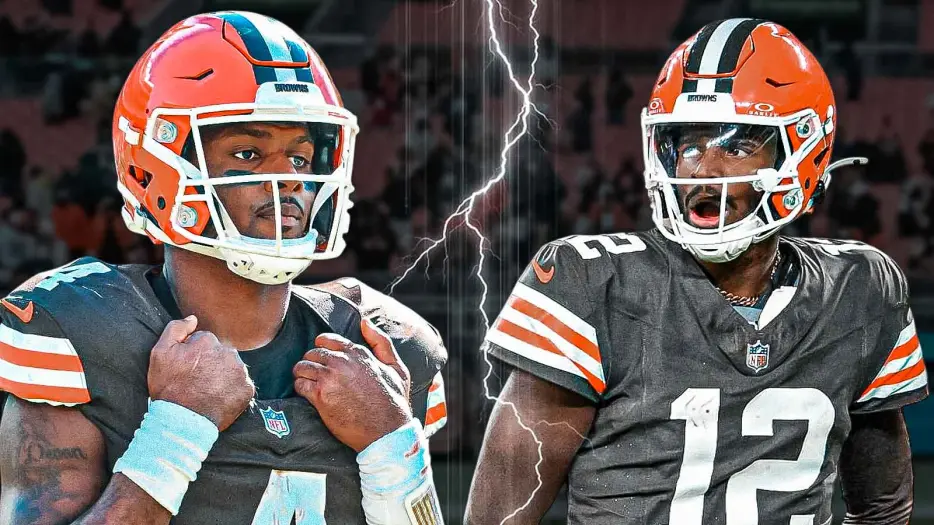
The temptation is understandable. Shedeur Sanders has energized portions of the Cleveland Browns fan base. He has also flashed intriguing potential whenever he has stepped onto the field. Sanders represents the kind of youthful hope that franchises often rally around during periods of transition. Yet as the Browns dive into training camp, the smartest path forward may not be the most popular one. Before Cleveland officially hands the offense to Sanders, the organization owes it to itself to find out exactly what remains of Deshaun Watson. The Browns have invested too much into Watson to simply bypass the evaluation process now. More importantly, the arrival of Todd Monken and an improved supporting cast creates perhaps the best environment Watson has had since arriving in Cleveland.
The Browns made one of the most shocking moves in franchise history by trading away Myles Garrett. That decision signaled a major shift in organizational priorities. Yes, that move generated headlines. That said, Cleveland simultaneously focused on constructing a stronger infrastructure around its offense.
The front office aggressively addressed the offensive line. They added proven veterans Zion Johnson, Elgton Jenkins, and Tytus Howard while investing heavily in Spencer Fano. The goal was to eliminate excuses and create an environment where whichever quarterback wins the job has the necessary protection to succeed.
Unlike previous years, Cleveland now enters 2026 with a revamped lineup specifically designed to support a quarterback-centric offense. That matters because evaluating Watson fairly requires giving him a legitimate chance to operate behind competent protection.
For the first time in his Browns tenure, the surrounding circumstances may finally allow for a clear verdict.
The strongest argument for starting Watson has little to do with sentiment and everything to do with business. The Browns committed a fully guaranteed five-year, $230 million contract to Watson in 2022. It remains one of the most significant financial decisions in NFL history.
Since arriving in Cleveland, Watson’s availability has been limited by suspension and injuries. As a result, the Browns still do not truly know whether Watson can be their quarterback moving forward. That uncertainty is precisely why they cannot simply bench him if he is healthy.
If Watson starts and still struggles, Cleveland finally gets clarity. The franchise can move into 2027 knowing it exhausted every reasonable avenue before moving on. However, if Watson never receives that opportunity, questions will linger. The Browns would be making one of the most important quarterback decisions in franchise history based on incomplete information.
No front office wants to carry that uncertainty into the future.
Just as important as the financial investment is the schematic fit. When Watson emerged as one of the NFL’s premier quarterbacks in Houston, he thrived in an offense built around shotgun formations and vertical passing concepts. The fit in Cleveland has often felt less natural.
Monken’s arrival, though, changes the equation. The Browns’ new offensive approach is expected to place greater responsibility on the quarterback before the...