 Steelers Now
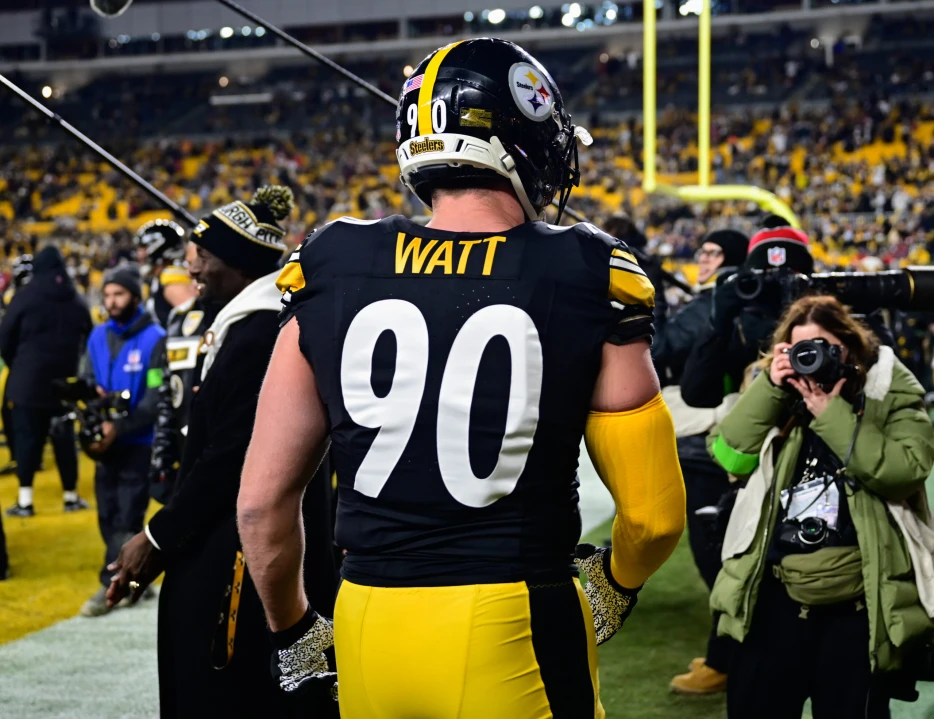
Popular sports television personality Colin Cowherd sparked debate this week with a bold take on how the Pittsburgh Steelers could better position themselves for the future, and it involved trading franchise cornerstone T.J. Watt for draft capital.
Speaking on The Herd, Cowherd revisited a stance he’s held for years.
“A couple of years ago, when I said I’d move T.J. Watt and get more picks, that was outrageous,” Cowherd said. “T.J.’s 0-for-5 in the playoffs. How outrageous is it?”
Cowherd is often criticized for delivering provocative, sometimes borderline idiotic takes, but this one may hit closer to an uncomfortable truth for Steelers fans. While Watt remains one of the defining defensive players of his era, the argument for trading him extends well beyond postseason frustration.
The Steelers have yet to win a playoff game during Watt’s career, and his postseason production has been modest, just one sack in five appearances. But the conversation doesn’t stop there.
Watt reset the market last July, becoming the highest-paid non-quarterback in NFL history at that time. Although his résumé is elite, the timing of the extension is fair to question. His sack totals and overall impact have shown significant signs of decline, particularly when compared to earlier peaks. Watt recorded 19 sacks in 2023 alone, yet totaled just 17.5 combined across the 2024 and 2025 seasons.
What makes the discussion more legitimate is what happened when Watt wasn’t on the field.
After Watt suffered a lung injury in 2025, the Steelers’ defense held up, and in some cases thrived, without him. The edge rotation of Jack Sawyer, Alex Highsmith, and Nick Herbig proved capable of sustaining pressure and maintaining structural integrity. Highsmith and Herbig both outproduced Watt in sacks and tackles for loss that season despite playing fewer snaps, while Sawyer flashed as a viable long-term contributor.
This marked a notable shift from previous seasons, when Pittsburgh struggled badly without Watt. For the first time, the defense demonstrated that it could survive, and function, without being entirely built around him.
That reality becomes even more significant given the broader organizational changes underway. With Mike Tomlin stepping down, the Steelers are entering a true transitional era. A new coaching staff often brings schematic changes, philosophical shifts, and a willingness to reshape the roster rather than cling to legacy pillars.
In that context, moving Watt for premium draft capital could represent a clean break, a chance to align the roster timeline with a new regime rather than prolong an in-between phase. While Watt still commands extra attention through chips and double teams, his absence no longer appears as catastrophic as it once did.
Trading a future Hall of Fame pass rusher would be emotionally difficult and controversial. But with depth on the edge, a defense that has shown resilience without him, and a franchise turning the page at head coach, the idea is no longer outrageous.
It may simply be the cold, calculated decision that defines the Steelers’ next era.
This article originally appeared on...