 ClutchPoints
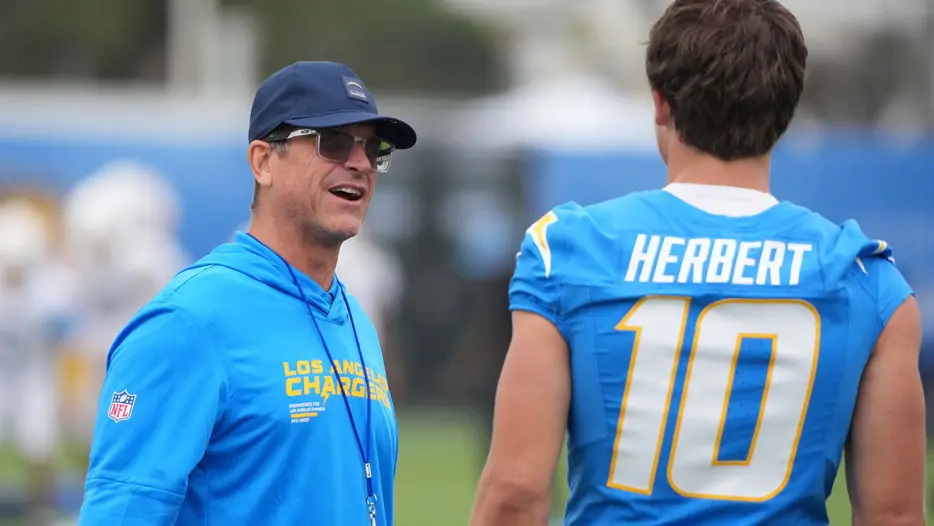
The Los Angeles Chargers have spent the past several months constructing what looks like one of the NFL’s most intriguing rosters. They upgraded the offensive line, added versatile weapons, and reinforced the defensive front. They also handed Justin Herbert an offensive architect known for squeezing every ounce of production from his personnel. On paper, the Chargers appear poised to challenge the AFC’s elite. Yet as mandatory minicamp unfolds, one question towers above every other storyline in El Segundo. It is about whether Mike McDaniel’s offensive vision can fully unlock Herbert’s immense talent. Until the Chargers answer that question, every other development remains secondary.
General manager Joe Hortiz entered the offseason wanting to build a tougher, smarter, and more versatile football team around his franchise quarterback. The Chargers began by signing veteran center Tyler Biadasz. They followed that move by trading for David Njoku, giving Herbert one of the league’s most dynamic tight ends. The commitment to versatility continued with the additions of fullback Alec Ingold and tight end Charlie Kolar.
Defensively, Los Angeles invested heavily in depth and physicality. Dalvin Tomlinson and Teair Tart were brought in to reinforce the interior defensive line. First-round edge rusher Akheem Mesidor joined an already talented pass-rushing group. The result is a roster that looks significantly different from the one that finished the previous season. More importantly, it is a roster carefully assembled to execute a very specific vision.
Everything the Chargers accomplished this offseason leads back to one fundamental question. Can McDaniel successfully merge his offensive philosophy with Justin Herbert’s unique strengths? That question sits at the center of every practice rep and every installation period during minicamp.
McDaniel has built his reputation around a creative, motion-heavy offense rooted in zone-running concepts and play-action deception. His systems thrive when defenses are forced to respect the ground game before being punished by explosive throws downfield.
Herbert’s career has largely unfolded within a different framework. For much of his time in Los Angeles, he has operated as the centerpiece of a high-volume passing attack. He frequently carroes the offense through traditional drop-back concepts and pure arm talent.
Neither approach is wrong. The challenge lies in blending them together. The Chargers do not need Herbert to become a game manager. They need him to remain one of the league’s elite quarterbacks while also embracing easier throws and more efficient offense. If McDaniel and Herbert can find that balance, Los Angeles could field one of the NFL’s most dangerous attacks. If they cannot, the offense risks becoming a collection of talented pieces that never fully fit together.
Before any offensive transformation can flourish, the Chargers should answer another critical question. Can the offensive line provide the stability necessary for McDaniel’s scheme to operate at maximum efficiency? The answer starts with Rashawn Slater and Joe Alt.
Both tackles are working their way back toward full strength. Their ability to communicate effectively with Biadasz will be heavily scrutinized throughout...