 Stampede Blue
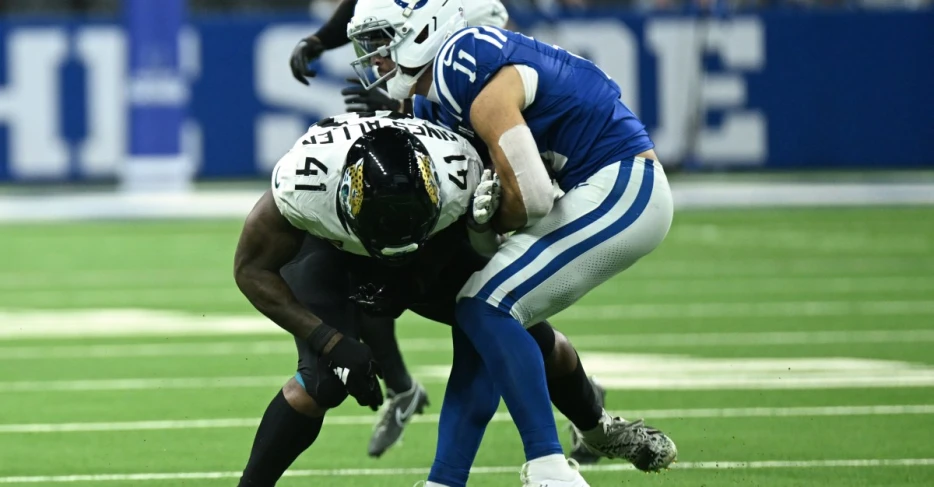
There are certain conversations NFL teams don’t want to have, but are forced into anyway. The Colts’ situation with Michael Pittman Jr. is one of them. Pittman is a good player, a respected leader, and someone who has done everything asked of him since arriving in Indianapolis. This isn’t about questioning his toughness or professionalism. It’s about timing, money, and where the franchise is headed. As the Colts approach the 2026 offseason, Pittman’s contract has quietly become one of the most consequential levers they can pull — and ignoring it may be more damaging than making an uncomfortable decision.
When Pittman signed his extension, it made sense. He was the clear No. 1 receiver, the offense lacked proven pass-catching depth, and stability mattered. But contracts don’t exist in a vacuum. By 2026, Pittman’s cap number balloons into territory that demands justification, not sentiment. Cutting or trading him would free up roughly $24 million in cap space. That’s not marginal flexibility — that’s the difference between reshaping a roster and being boxed into tough compromises elsewhere. The structure of the deal gives the Colts an exit, and exits exist for a reason.
That money matters even more when you zoom out and look at the Colts’ broader cap picture. While Indianapolis isn’t in immediate cap hell, their flexibility is far more fragile than it appears. Quarterback uncertainty still looms. Several veterans are aging into more expensive phases of their careers. Extensions for younger players are coming and they are not optional. The idea that the Colts can simply keep every high-priced piece together ignores how quickly cap space evaporates once you start accounting for future years instead of just the next one. Pittman’s contract sits right at the intersection of affordability and opportunity cost.
Alec Pierce is the pressure point that makes this conversation unavoidable. Pierce is entering the phase of his career where second contracts happen, and based on the market and his trajectory, something in the range of four years and $80 million is a realistic projection. At roughly $20 million per year, Pierce won’t be cheap — but he’s younger, ascending, and stylistically better aligned with where the offense is going. He stretches the field, dictates coverage, and creates space for others. Paying Pierce is a forward-looking investment. Paying Pittman at his current number is a backward-looking one.
Trying to justify both contracts at once is where the math breaks down. This isn’t a pass-heavy offense built around two high-volume receivers. It’s a system that values efficiency, spacing, and flexibility. Allocating top-of-market money to two receivers only works if both are consistently tilting defenses. Right now, only one of them is.
That becomes even clearer when you look at Pittman’s recent production. Over the last seven games, he’s totaled 26 catches for 212 yards and one touchdown. That’s barely over 30 yards per game, on nearly 40 targets, with fewer than six yards per target. Those aren’t empty snaps — he’s still involved — but they’re low-impact ones....