 Turf Show Times
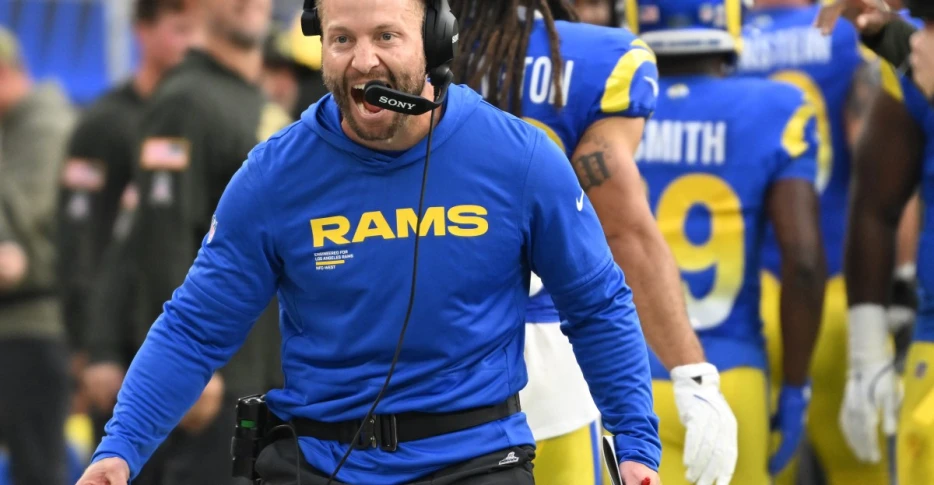
Sean McVay is giving the Los Angeles Rams the best performance of his career in 2025. It’s an effort worth consideration for the NFL’s coach of the year award, though this is usually a sign of doom for winners.
The Rams added new(ish) wrinkles with a frequent deployment of 13 and heavier personnel, a hybrid run game that utilizes both gap and zone concepts, sending pass catchers through the line to spring them open down the field, and fixing the team’s red zone woes by relying heavily on a match made in heaven between Matthew Stafford and Davante Adams.
McVay’s offensive game plans are works of art. He knows who will likely be fooled by the team’s use of heavier personnel and respond by putting linebackers on the field. It’s a changeup that worked to perfection against the San Francisco 49ers where TE’s combined for 114 yards and two touchdowns. McVay was wise enough to know that the Seattle Seahawks deploy a similar strategy and would not fall for the same trick defensively. In Week 11, the Rams used multiple tight-ends on only 20 plays.
Of all quarterbacks with at least 258 drop backs, Matthew Stafford has posted the following measures with play action (according to Pro Football Focus):
Passes without play action are generally considered a more stable metric of quarterback performance. Play action is an offensive easy button that offensive play callers can use to the point where it becomes a crutch and/or covers up deficiency at the signal caller position. In McVay’s case, he’s making the most of his team’s talent and capitalizing on Stafford’s hot streak.
When you take play action away, Stafford still ranks towards the top of the NFL in most metrics but does suffer a bit of a regression. If the veteran continues to play more like he did last week against the Carolina Panthers than how he started the year, it could be because McVay is unable to scheme up the same advantages. It happens every year to some offenses as the calendar flips to December.