 Stampede Blue
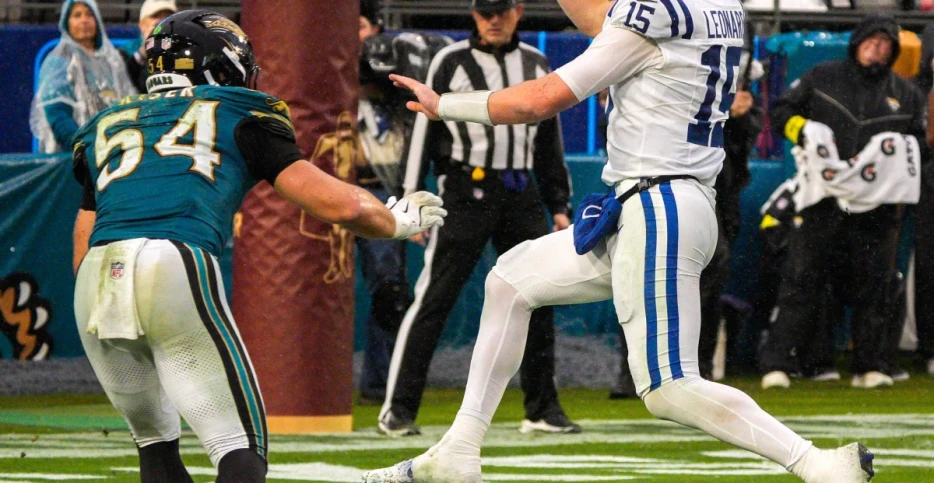
Assuming Riley Leonard is fully healthy, he has a big opportunity in front of him.
The Colts enter the final four games of the season without clarity at the most important position in football — not because they lack options, but because none of those options are firmly settled. Daniel Jones’ future is murky. Anthony Richardson is under contract and still developing. And the draft and trade markets offer no easy answers. That uncertainty creates a rare evaluation window for Leonard, who now finds himself with the keys to a functional offense and a legitimate chance to change how the organization views its quarterback room heading into 2026.
The biggest contextual factor here is draft capital — or the lack of it. The Colts do not hold a first-round pick, and without premium draft positioning, they’re effectively priced out of the top rookie quarterback market. Even if a passer they liked somehow slid, the cost to move up would be prohibitive. Quarterback-needy teams don’t just pay first-rounders anymore; they pay multiple years of flexibility. For a roster with looming contract decisions and aging veterans, that’s not an attractive path.
That reality changes how teams think. When the top of the draft isn’t accessible, evaluation shifts inward. Development matters more than projection. Live NFL reps matter more than college numbers. Teams begin asking a different question: can someone already in the building become usable, reliable, or even competitive faster and cheaper than an outside solution?
That’s where Riley Leonard enters the equation.
The free-agent landscape doesn’t offer much relief either. Starter-quality quarterbacks rarely reach the open market unless there’s a reason. And if one does, the cost usually exceeds their functional value. Indianapolis doesn’t project as a team that can or should overspend at quarterback this offseason, especially without full clarity on how the current pieces might shake out.
Daniel Jones was supposed to provide that clarity — or at least stability. Instead, his Achilles injury introduces more uncertainty than reassurance. The injury itself is significant; Achilles tears remain one of the most difficult lower-body injuries for quarterbacks to return from in any meaningful way. Even when players come back on schedule, explosion, mechanics, and confidence aren’t guaranteed to follow. Mobility takes time, and confidence in movement sometimes never fully returns.
Jones’ contract status further complicates things. He’s a pending free agent. The Colts don’t know when he’ll be healthy enough to return. They don’t know how effective he’ll be once he does. And they certainly don’t know if committing long-term to a quarterback rehabbing a major injury makes sense without another option ready behind him.
That doesn’t eliminate Jones from the 2026 conversation — but it does put it on pause.
Anthony Richardson remains part of the plan, too, but his situation isn’t as clean as contract language suggests. Yes, he’s under contract. Yes, the upside is undeniable. But development hasn’t followed a straight line, and the organization knows better than anyone that talent alone doesn’t guarantee availability, consistency, or...