 ClutchPoints
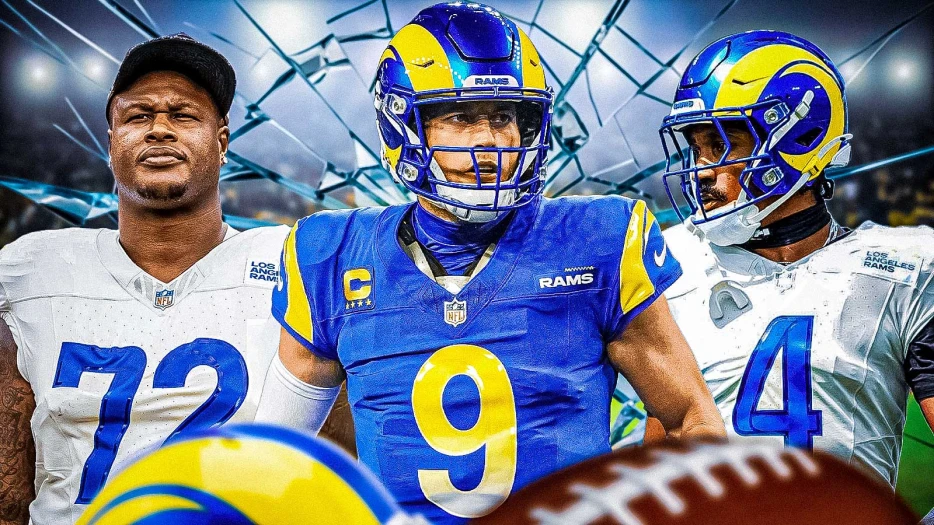
The Los Angeles Rams have spent much of the 2025 season proving they belong among the NFC’s most dangerous teams. They have made a habit of responding to adversity with poise. That’s what made their Week 17 loss to the Atlanta Falcons so jarring. This wasn’t a defeat born purely of bad luck or one freak play. It was a game where the Rams put themselves in a hole so deep that even one of their most spirited comebacks of the season couldn’t fully erase it. When the dust settled, the Week 17 loss was revealing. It also forced an uncomfortable question as the playoffs approach: who is most responsible for letting this one slip away?
The Rams fell 27-24 to the Falcons after nearly completing a stunning rally from a 21-0 halftime deficit. The first half was a nightmare. Falcons star Bijan Robinson carved up Los Angeles for 195 rushing yards and two total touchdowns. That included a franchise-record 93-yard run that felt like a punch to the gut. Atlanta dominated time of possession, controlled the trenches, and dictated tempo.
Things didn’t get easier when Matthew Stafford threw three interceptions. One of those was returned for a touchdown by Jessie Bates III. And yet, somehow, the Rams clawed their way back. A blocked field goal returned for a touchdown by Jared Verse ignited the rally. A late touchdown pass to Puka Nacua tied the game at 24-24 in the fourth quarter.
With 21 seconds left, though, kicker Zane Gonzalez drilled a 51-yard field goal to seal the Rams’ second straight loss. That turned a valiant comeback into a painful footnote.
Here we’ll try to look at and discuss the Los Angeles Rams most to blame for their week 17 loss to the Falcons.
Stafford finished the night 22-of-38 for 269 yards, two touchdowns, and three interceptions. It was easily his worst outing of an otherwise excellent season. The mistakes were uncharacteristic and costly. One poor read became a pick-six. Another stalled a promising drive. A third flipped momentum at a time when the Rams desperately needed stability.
To Stafford’s credit, he rallied the offense. He also delivered big throws late and nearly authored one of the most dramatic comebacks of the year. Stafford was fortunate not to have a fourth turnover stick after an Atlanta offsides penalty wiped away a strip-fumble recovery. Still, the truth remains: the Rams don’t find themselves down 21-0 without Stafford’s early misfires. In a tight playoff race, that margin matters.
Statistically, the Rams’ secondary didn’t look awful. Atlanta threw for just 126 yards, with 34 coming on Robinson receptions. That said, numbers don’t tell the full story. The coverage was soft, reactive, and rarely disruptive.
The Rams recorded just one pass defensed all night, which came on the opening drive. After that, Falcons quarterback Kirk Cousins faced few tight windows and rarely had to fit balls into traffic. The inability to force difficult throws...