 Big Blue View
It’s the end of another NFL regular season, and the New York Giants are once again in upheaval. A tradition unlike any other. The team plummeted once again to the nether regions of the NFL standings…but not far enough to secure the top pick in next year’s draft. The head coach that many fans wanted gone was fired…but not the general manager that many wanted to get the boot as well. Maybe most importantly, ownership family ties that permeate the front office remain in place.
Meet the new boss, same as the old boss, indeed. Giants fans won’t get fooled again. Except that we will. We always do.
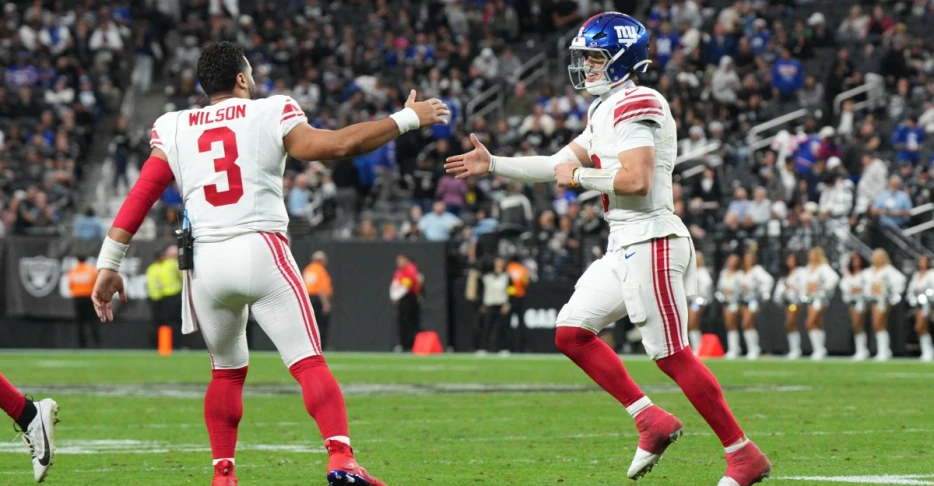
The one thing that justifies optimism this offseason, though, more than any in recent memory, is that the Giants seem to have found their quarterback, and that’s the hardest thing to do in football. Personally, I didn’t see it coming. Jaxson Dart wasn’t that high on my list entering the draft, other than the fact that he’d had lots of college experience, which is a plus. He started to change my mind the first time he stepped on the field in an exhibition game, and it just snowballed from there. Dart was a main reason for each of the Giants’ four victories this season, and he wasn’t the reason for most of the losses.
Dare we hope for a bright future based on Dart’s rookie performance?
Kevin Cole of the blog Unexpected Points has taken a look at that. There is no perfect measure of NFL player performance, maybe especially for QBs, whose merits are endlessly debated by fans and experts alike. One way modern analytics people get around this is to plot independent metrics against each other, which captures some of the uncertainty in the endeavor but also shows that each metric has some value.
Cole went back to the rookie season of every NFL quarterback in the past 20 years who played at least 300 downs in which the player either dropped back to pass or made a designed run. Here are the results. The plot below contains no information from the 2025 season for QBs who weren’t rookies this year, it only looks at each player’s rookie season. It’s up to the reader to judge things based on what we know about how a given veteran QB turned out:
The plot shows a totally objective metric, expected points added per play, plotted against the subjective Pro Football Focus grade. The three rookie qualifying quarterbacks are circled in red. The dashed lines are averages for all QBs. No metric is foolproof, hence the scatter in the diagram, but the strong positive correlation tells us that the analytics folks aren’t just making things up.
Dart falls into the upper right quadrant, evidence that he did indeed have a good rookie season. So does Tyler Shough of the Saints; Cam Ward of the Titans had a rougher go of it in Year 1. Whether Dart’s position is evidence that he’s going to...