 Sportsnaut
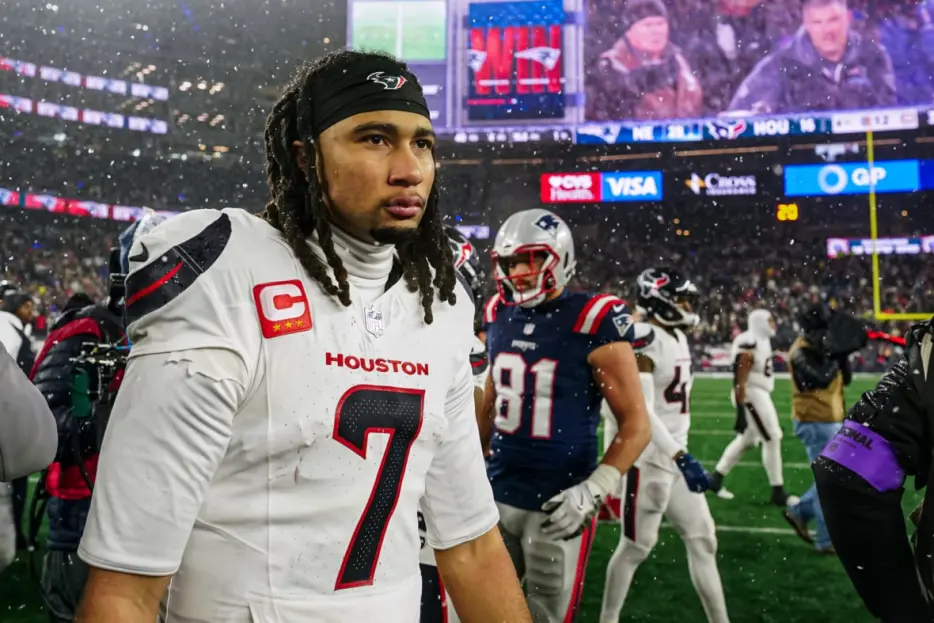
When the Houston Texans went from a three-win team in 2022 under Lovie Smith and Davis Mills to a 10-win team in 2023 under DeMeco Ryans and C.J. Stroud, it was one of the NFL’s best success stories. Three years later, the Texans still haven’t gotten past the Divisional Round playoffs.
After a putrid four-interception performance in the team’s 28-16 playoff loss to the New England Patriots, the recent blame has been placed on the shoulders of Stroud, the No. 2 overall pick in the 2023 NFL Draft. Stroud is under contract through 2027, but many other established stars from his draft class have already secured long-term deals, showing their teams’ confidence in the players’ futures with the franchise. Even Will Anderson, who was selected one pick after Stroud in 2023, has landed a long-term contract extension from Houston, but Stroud has not. So, what gives?
Some, like ESPN NFL insider Dan Graziano, believe the Texans’ hesitancy to sign Stroud to a long-term extension could be a sign of what’s to come. Graziano even went so far as to suggest that if the 24-year-old doesn’t maintain top form in 2026, Houston could start to hunt for a different franchise QB next offseason.
Right now, even after Stroud’s playoff dud, it’s hard to envision a team being willing to move off from a QB who’s delivered a 28-18 record since arriving as a rookie. Unlike many other young signal-callers, there weren’t the typical growing pains involved here; he led them to a playoff appearance right away, and that’s continued in the two seasons that have since followed.
Yet, there’s also a risk in overpaying a quarterback who isn’t an elevator or a difference-maker. Look at the Arizona Cardinals or Miami Dolphins, who were willing to cut Kyler Murray and Tua Tagovailoa, just to get their massive future salaries off the books. These were teams admitting they made mistakes in paying their first-round QBs more than they were worth in their current situations. Could the Texans eventually realize that Stroud simply isn’t worth a market-rate contract upwards of $60 million per season?
Related: 10 NFL Teams That Could End Super Bowl Drought in February
More must-reads: