 Acme Packing Company
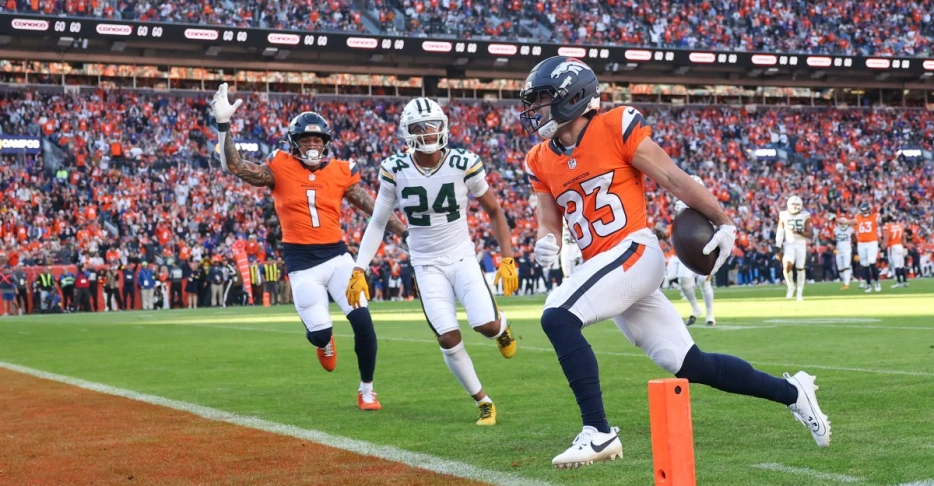
In Week 15, the Green Bay Packers defense turned in perhaps its worst defensive performance of the season. The Denver Broncos and head coach Sean Payton found multiple ways to attack some of the schematic tendencies and personnel weaknesses the Packers’ defense suffers from.
In addition to this, the defense lost Micah Parsons to an ACL injury, with Quay Walker and Evan Williams also leaving the game in the second half due to injuries. There were multiple injuries on offense, too. Overall, it was not a good day on that front, and the Packers are on a shorter week with a Saturday game this week.
On defense, though, even before losing those players, the Broncos were still able to take advantage of the Packers’ pass defense in some critical ways. And the way they did it was by putting stress on the Packers’ corners and isolating them in situations where they did not have any kind of bracket or top-down help.
They were able to do this because of the way Jeff Hafley structured the defense by always playing the nickel defender to the wider side of the field (the “field” side) and always playing the Sam linebacker to the “short” side of the field (the “boundary” side). These aren’t terms typically associated with the NFL due to the narrower hash marks, but if there’s one thing modern NFL offenses are good at, it’s creating a ton of space where there normally isn’t any.
At the college level, it’s a bit easier to exploit defenses due to the width of the hashes and lining up the passing strength to the boundary. The hashes make the defense more vulnerable to the field side because there’s a lot more space to cover. College offenses can usually accomplish it most of the time with two or three receivers into the boundary (formation into the boundary).
In the NFL, it almost always has to be done with a 4×1 formation to truly stress the defensive alignment or a fast motion to create a 2×2 or 3×2, where they can influence the nickel and pick on a weaker corner defender. The Broncos did both.
The Broncos had several explosive plays out of 4×1 formations that set up on plays where they tested how the Packers would align to the formations. The Packers nearly always align the nickel to the wide side of the field, probably because they don’t want a linebacker trying to run and cover in space. The nickel defender is faster. In more traditional defenses, the nickel travels with the passing strength, no matter if that is the short side of the field.
Here, the Broncos get confirmation that the nickel, Javon Bullard, will stay to the wide side of the field even with a change of strength motion. The Broncos’ play call is a bubble RPO with a wide zone run to the weak side. Quarterback Bo Nix is reading Rashan Gary.
The defense is in cover-3 with Bullard essentially acting as...