 Pride of Detroit
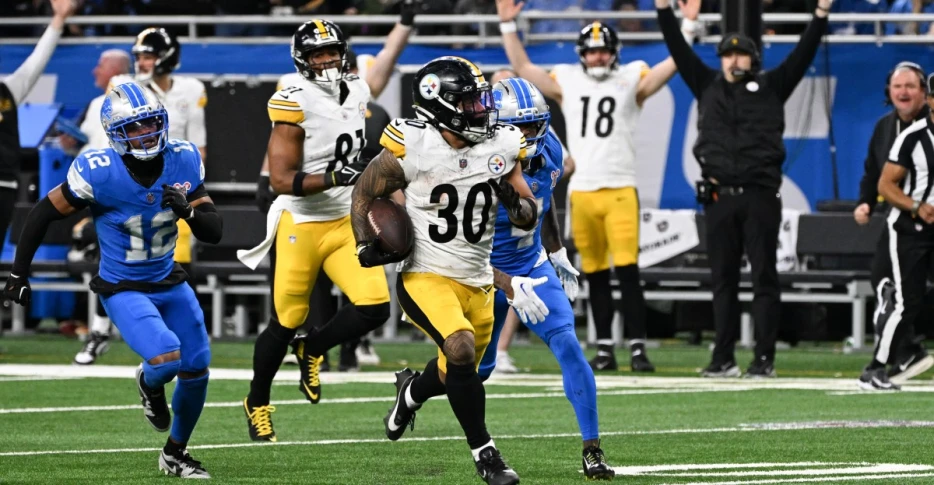
The Detroit Lions’ unsuccessful end-of-game goal-line sequence against the Steelers almost perfectly encapsulated their tumultuous 2025 season. It was a year defined by brief optimism, uncomfortable stretches, and frustration—a season that never quite felt like the version of this team fans had grown used to. When answers were needed most, they weren’t found. That final series mirrored the season itself: desperate, disjointed, and underwhelming. They put themselves in this situation.
There was something painfully fitting about the final nails in the Lions’ once-promising season being delivered by Matthew Stafford and Aaron Rodgers. Throughout the year, Detroit lacked the control and confidence that once defined them. Fans who had grown accustomed to tuning in with prideful enjoyment and an expectation for a consistent product instead found themselves watching a team that felt unsure of itself, often searching for an identity it no longer possessed.
With home-field advantage and an extra day of preparation advantage, Detroit instead got pushed around by a supremely average football team—a Steelers squad that had struggled mightily against playoff contenders. By the end of the season, the Lions had regressed into the same tier of mediocrity as the team they were supposed to beat. The stock report recap mirrors a disappointing average football team, as 14 teams will advance into postseason play, and it’s hard to swallow that this team won’t be one of them.
Stock down: Dan Campbell, head coach
The numbers are increasingly difficult to ignore. The Lions are 4–6 over their last ten games and 3–5 since their Week 8 bye. They sit just one game over .500 and only one game ahead of a Vikings team that not only beat them but started J.J. McCarthy, Carson Wentz, and Max Brosmer at quarterback this season. Now Detroit enters a losing streak with those same Vikings looming on a much less meaningful remaining slate.
Earlier in the week, Campbell praised the team’s practice effort, pointing to strong metrics in change of direction and deceleration. Whatever those metrics suggested, they never showed up on Sunday. The Lions looked tight, unprepared, and at times timid, allowing the Steelers to dictate the physical tone. Once again, Detroit desperately played from behind without an identity or a defining strength.
With Campbell still responsible for play-calling duties, the offense produced arguably its least cohesive game plan since that Vikings game. The end-of-game goal-line failure personified the larger issue: no in-game answers, no adjustments, and no ability to solve even a bland defensive structure with vulnerable middle-of-the-field defenders.
Entering the season, the Lions were widely viewed as a legitimate Super Bowl contender, even after last year’s premature playoff exit. Instead of capitalizing on that momentum, Campbell chose familiarity when filling both coordinator vacancies—opting for John Morton and Kelvin Sheppard, neither of whom appeared to be in high demand elsewhere. The result was clear regression on both sides of the ball.
This offseason now falls squarely on Campbell. He must adapt, make difficult decisions, reestablish the team’s identity, and find the fundamentals...