 Gang Green Nation
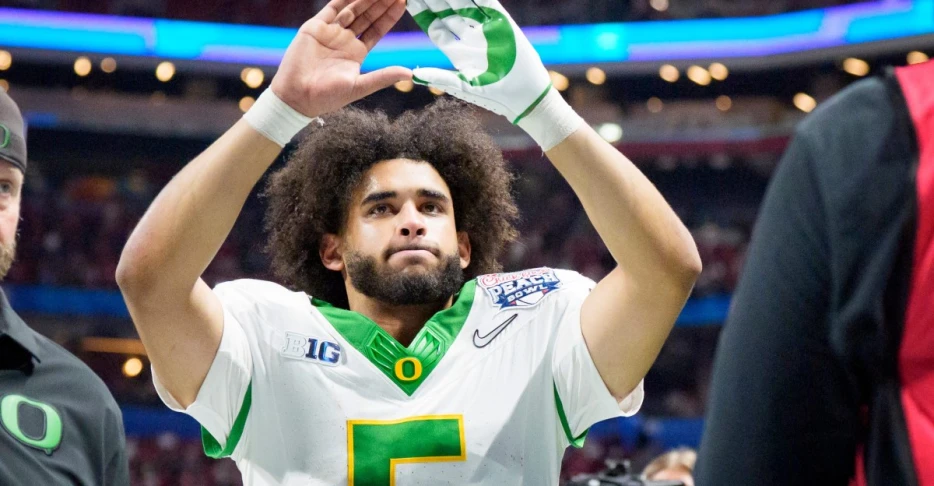
In a somewhat unprecedented move Dante Moore, who was widely viewed as the consensus No. 2 pick in this year’s draft has, decided to forego declaring for the 2026 NFL draft and instead return to Oregon for his senior season.
On the surface, the decision makes sense from a developmental standpoint. Moore has long been viewed as an immensely talented but still relatively inexperienced prospect. That said, it’s an enormous financial risk. By returning to school, Moore potentially passed on $40+ million in guaranteed money, something I personally would not be comfortable doing. There is tremendous risk involved here as well.
It’s important to acknowledge that we don’t yet have the full picture. There are several plausible explanations. It’s possible Moore received feedback suggesting he wouldn’t go as high as initially projected. This is something we’ve seen happen plenty of times as the process moves from January to April. It’s also possible this decision had nothing to do with draft stock at all. Some will speculate that Moore simply didn’t want to end up with the Jets, though that’s difficult to buy into without evidence. It’s equally possible the Jets themselves weren’t as interested in Moore as public perception suggested.
The truth is, no one knows yet.
What is clear, however, is that Moore’s decision will have significant ramifications for the Jets, both in the short term and the long term. Let’s take a look at the potential negatives and positives of this decision.
Negative #1: The Value of the No. 2 Pick Takes a Hit
This one stings. Regardless of whether the Jets were ever truly interested in Dante Moore, one thing is objectively true: the No. 2 pick became less valuable the moment this announcement dropped.
For the Jets, trading down always loomed as one of the most logical and arguably best paths forward. In the NFL, teams are far more willing to trade up when a quarterback is on the board, and the team moving down typically receives a premium well beyond the pick’s baseline value. Remove that quarterback from the equation, and the leverage disappears.
Without a clear QB prospect available at the top of this draft, the Jets’ trade-down options shrink dramatically. Could a team behind them still fall in love with a non-quarterback and move up? It’s possible, but it’s far from likely. And even in that scenario, the return the Jets could command for the pick would be significantly reduced.
Simply put, Moore’s decision dealt a meaningful blow to the overall value of the No. 2 selection.
Negative #2: You’re Likely Not Finding Your Long-Term QB This Off-Season
The league is weird, so I’m not completely ruling out the possibility that the Jets somehow stumble into their long-term quarterback this offseason. Maybe Malik Willis is that guy. Maybe Tanner McKee becomes available and is. Maybe Kyler Murray has a late-career renaissance. Maybe Ty Simpson, Trinidad Chambliss, or even someone like Garrett Nussmeier or Cade Klubnik shocks people in the draft.
All of that...