 Windy City Gridiron
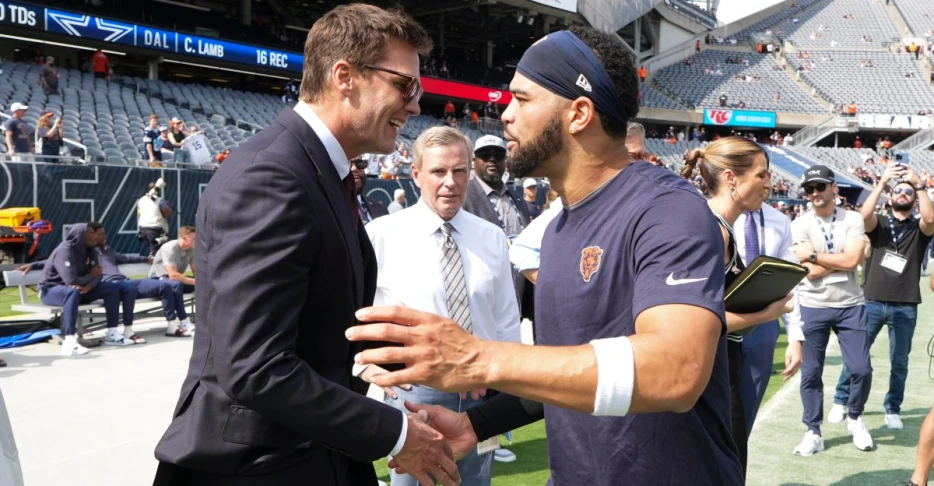
There’s something fitting about the fact that Tom Brady has spent so much time watching and talking to Caleb Williams this season as the second-year quarterback leads the Chicago Bears’ epic NFC North-winning turnaround.
It’s not just because Williams has always idolized Brady, shooting for the stars and hoping to land in the same universe as the man collectively called the “GOAT.”
It’s because the more I watch Williams play, I find myself thinking of Brady. Not what Brady finished his career as, but how he began it.
True, Brady was the 199th overall pick in his draft, not the first, as Williams was. Brady came into his career as a sixth-round backup to a man in Drew Bledsoe who had just signed the richest contract in history at that time, not a franchise savior expected to rescue a charter organization from mediocrity.
But once you take the field as a starter in the NFL, none of that really matters. The opposing defense isn’t thinking about your draft pedigree while they’re trying to rip your arms off and break your spirit. They only respect you if you beat them. Over and over again. If you break their will when it matters most.
When you look at Brady’s stats in that 2001 season, where he started 14 games, they don’t scream “special”: 2,843 yards (189.5 per game), 18 touchdowns, 12 interceptions, and a passer rating of 86.5. His Pro Bowl nod felt mostly related to the Pats’ 11-3 record with him as a starter, which was again more a product of him being a good steward of the offense.
But when it was time to win a white-knuckler in his first-ever playoff game against the then-Oakland Raiders, he pulled the game of his life to that point. (Yeah, the Tuck Rule play was a fumble. But it wasn’t called. So be it.) And then we all know what happened in the Super Bowl—the drive that earned him his first championship game MVP and officially launched him to stardom.
Williams, in a way, has become a new-age version of that. Not in terms of the raw numbers, but in the way he has slowly matured from a game-manager to a game-winner for the Bears.
The growing pains aren’t over. The accuracy’s not perfect (57.9%). But when the chips are down, there might not be a quarterback you’d rather have facing down a game-winning drive more than Williams, who has spearheaded five of the team’s six game-winning drives in 2026. They don’t call him the Iceman for nothing.
But like 2001 Brady, the Bears haven’t demanded Williams don the Superman cape for 60 minutes in his crucial second season. They’ve played the kind of football that those early Belichick teams were famous for: physical and ground-based on offense, and opportunistic on defense. They gave him the infrastructure to grow and make his mistakes early, so that he’d have the comfort level to play his best football at the right times: at the end...