 Acme Packing Company
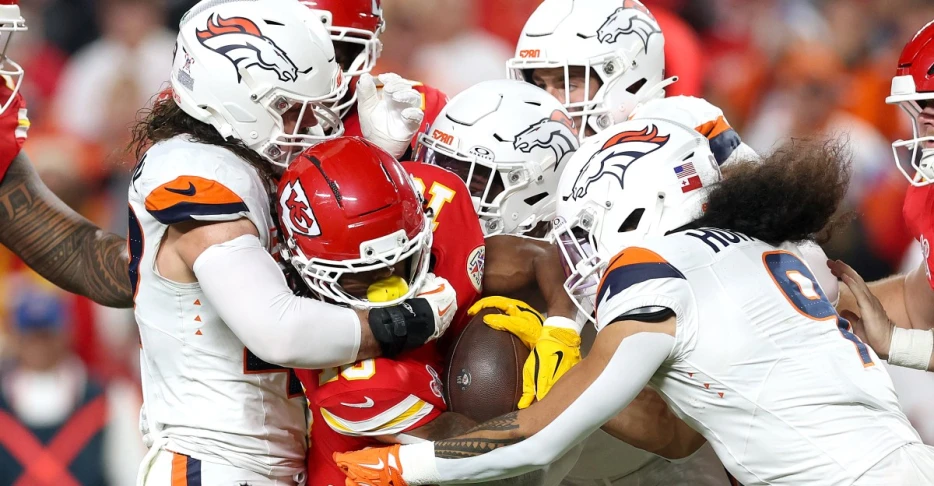
One of my favorite stats to check after the regular season is over is which NFL teams won a bunch (or lost a bunch) of close games. Why? Because, to tell you the truth, no one has really figured out how to win close games consistently in this league. For the most part, your record in close games is mostly noise, and it has almost no (positive) barring in your future if you won a cluster of close games the year before. Being good in close games is largely a myth.
Obviously, it’s better to win than lose in the moment, but the way that you win is sort of important in the NFL, because of how the league purposely tears winning teams apart to provide league parity. If you should have been 9-8 but you went 13-4, the mechanics of the league will still treat you like a 13-4 squad, even if you’re a 9-8 talent.
The two biggest direct examples of this are the NFL draft, where teams that win more games are punished, and the league’s scheduling alignment. With the expanded 17-game schedule, teams now play three opponents per year that they wouldn’t have played otherwise, based on where they finished in their division the season before.
Clearly, there are team-level changes year-to-year outside of these two mechanics, but there’s a strong trend that shows winning too many close games actually severely impacts your ability to repeat a similar record (overall, not just in close games) the following season. Don’t believe me? Below is the chart.
This data is the result of every team’s season since free agency began in 1993 (roughly the start of the NFL we see today from a parity standpoint, the salary cap started in 1994). The X axis is how many close wins (within eight points, a single possession) a team had above .500 in an individual season. So, for example, the 2008 Green Bay Packers were 1-7 in close games, which would have been three wins below .500 (-3 on the X axis). The Y axis is how many more wins a team gets the next season (overall, not just close games), based on the X axis data point. (Hey, the Packers benefited from close-game regression, won five more regular-season games the next year and won a Super Bowl! Yay!)
If teams could win (or even lose!) close games consistently, this line would be flat. It is not. Teams that lose close games a lot are usually better the next year. Teams that win close games a lot are usually worse the next year. This is the NFL’s parity model in action.
Usually, I update this data after every regular season to get a good feel for which teams are due (one way or another) in the upcoming year. We’ve been busy covering Green Bay’s coaching non-search since the Packers’ season ended, so I just finally have time to run the numbers. Sorry to the people who have been asking me...