 Cincy Jungle
First.
The difference between the standard of football in Buffalo, Pittsburgh, and Baltimore—and the standard of football in Cincinnati—is absurd.
Every team with an elite quarterback (with the exception of the Chiefs) whose season fell short—whether in the playoffs or the regular season—made changes at head coach. The Ravens fired John Harbaugh, who is now with the Giants. The Bills fired Sean McDermott after being eliminated in the divisional round by the Broncos. Even Mike Tomlin and the Steelers parted ways.
The Bengals, meanwhile, missed the playoffs three seasons in a row and didn’t fire a single coach.
No adjustments. Nada. Zip. Zilch.
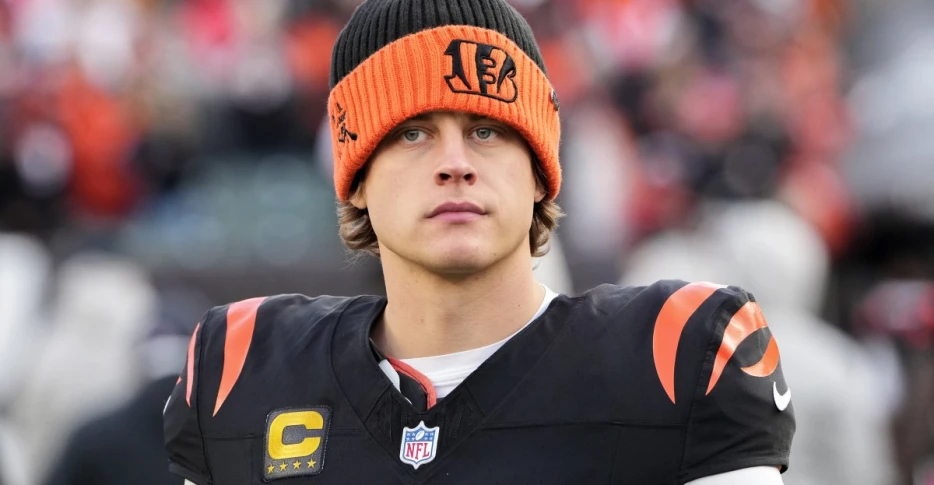
Half the franchises in the league—if they had Joe Burrow, Ja’Marr Chase, and Tee Higgins on the roster—would’ve fired Zac Taylor after the 2024 disaster. All of them would’ve done it after 2025. Duke Tobin, too.
So yeah, the standard here is lower.
Sucks, but it is what it is.
Second.
The Bengals are currently stuck in a cycle we’ve now seen play out three times, with three different quarterbacks and two head coaches.
Let me explain.
Carson Palmer was drafted in 2003. In 2003, 2004, and 2005, his cap hit was relatively small—3.3% in ’03 and 9.5% in ’05—and during that span the Bengals averaged a 9–7 record. After his first big extension, his cap share jumped to roughly 12%. From 2006 through 2010, the Bengals averaged a record of 6–10.
Palmer got paid, and—outside of the 2009 season—the Bengals forgot how to win.
Then came Andy Dalton in 2011. As a second-round pick under the new CBA rookie wage scale, Dalton’s cap hit never reached Palmer levels, but the pattern still showed itself.
From 2011 through 2015, Dalton’s cap share averaged about 3.2%. During that stretch, the Bengals enjoyed an unprecedented run of regular-season success, making the playoffs five straight years with an average record around 10–6.
Then Dalton got paid.
Even though his cap share only peaked at 9.4%, the results changed. Over the next four seasons, the Bengals’ average record dropped to 5–11.
And then Joe Burrow arrived—and the cycle reset.
From 2020 through 2022, Burrow’s cap share averaged just over 4%. In that time, the Bengals reached a Super Bowl and two AFC Championship games. Since then, his cap share has jumped to an average of 12.2%, and the Bengals have missed the playoffs three straight seasons.
Burrow is due 15.7% of the cap this season. Combined with Chase and Higgins, those three will account for more than a third of the team’s cap space.
I’m not saying they shouldn’t have re-signed all of them. I’m saying it would’ve been nice if those contracts were structured like they were signed with a pen, not a quill and parchment. And I’m also saying that if history really does repeat itself, the Bengals are going to be fighting an uphill battle just to make the playoffs with their quarterback taking up that much of the pie.
They couldn’t figure it out with Palmer. They...