 Windy City Gridiron
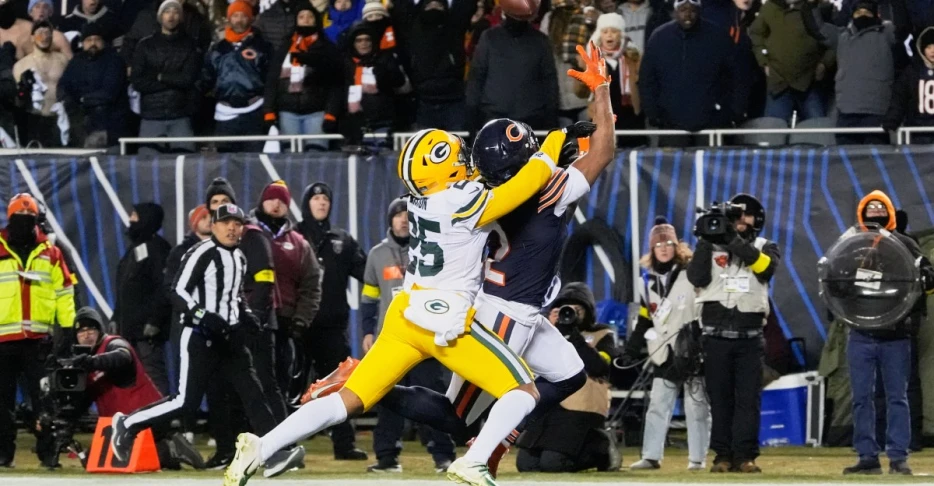
Week 16 brought Saturday night football too Chicago as the rematch that we’d all been waiting for took place at Soldier Field. Both the Bears and the Packers clearly made adjustments to their game plans entering this one, with the Bears defense notably playing a more “bend-don’t-break” style to limit Green Bay’s opportunities for explosive plays. This worked well, but the side effect was a drastic change in time of possession in favor of the cheesier team. To put it simply, while the Bears’ defensive strategy was successful in limiting the points that the Packers were able to put on the scoreboard, it also made each Chicago possession even more valuable. This looked like it may pay off incredibly well with an early lead until a fumbled snap on a trick play resulted in a turnover on downs as the Bears ended their first drive in the red zone. From there, offensive success was limited to field goals until the miraculous finish. Here’s a look at our ongoing statistical benchmarking:
Stop me if you’ve heard this one before, but Caleb Williams absolutely came to life in the fourth quarter of this game. With two critical drives to secure overtime period and then the victory, Williams elevated his stat line from mundane to very solid on the day. The context makes it all the more impressive. Five weeks in a row against strong defenses has not been a picnic for Caleb, but he’s held his own as a passer (91-of-168, 1,071 yards, 10 TDs, 2 INT), delivered a 4-1 record, and was close to another OT or a chance for one more game-winning play attempt in the lone loss at Green Bay. An encouraging sign that Caleb is picking up steam late in the season.
Caleb Williams
Comp: 2022 Jared Goff
Benchmark Statistics:
The Bears had success in the run game on a per carry basis, but as I described, the total number of offensive possessions was limited, with some having to be pass-heavy by virtue of trailing late in the game. This resulted in a fairly low volume run game for Chicago. Swift was able to carry the ball for 58 yards on the ground and another 12 in receiving yards, while Kyle Monangai added 50 and 43, respectively.
D’Andre Swift
Comp: 2022 D’Andre Swift
Benchmark Statistics:
Kyle Monangai, DJ Moore, Roschon Johnson, etc.
Comp: 2024 David Montgomery
Benchmark Statistics:
Kmet and Loveland had a modest outing, but played a crucial role in setting up the Bears offense for crucial late scores. Generally, it seemed like the Packers had a good plan in place for limiting what the TEs could do to harm them through the air – especially Loveland. At this point in the season, I think we can see that both of these players are having very different seasons than their comps of Hockenson and LaPorta. Kmet clearly is in more of a balanced role than Hockenson...