 Pride of Detroit
In the wake of Terrion Arnold’s recent departure from the team, the Detroit Lions are in need of at least two cornerbacks to step up in 2026.
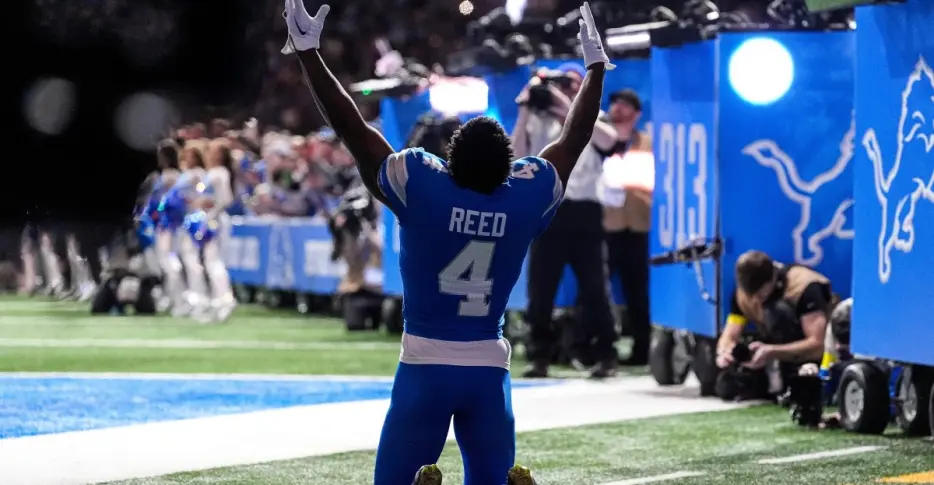
D.J. Reed was signed to be one of those players last year. After not being able to come to an agreement with Carlton Davis, the Lions pivoted to Reed in free agency and inked him to a three-year, $48 million deal last offseason. At the time, it was praised as a savvy and frugal move from Brad Holmes, but after an injury-filled season in Detroit, Reed has a ton of pressure on him to live up to expectations in 2026.
Previous season previews: RB Jahmyr Gibbs, RB Sione Vaki, WR Jameson Williams, OT Penei Sewell, EDGE Aidan Hutchinson, DT Levi Onwuzurike
As noted, with the contract that Reed signed and a strong previous three years with the Jets, he was expected to win a starting job and potentially be the team’s top corner. There were certainly some questions as to how he’d play outside of the shadow of Sauce Gardner, but his fit as a physical man-corner and strong run defender made him a pretty clean fit with Detroit.
11 games (11 starts)
Stats: 46 total tackles, 7 passes defended, 2 INTs, 1 FF, 1 FR PFF defensive grade: 65.2 (47th out of 121 qualifying CBs — minimum 246 snaps)
PFF coverage grade: 61.3 (63rd out of 121)
PFF run defense grade: 78.7 (13th out of 121) PFF tackling grade: 71.9 (20th out of 121)
After a tough opener, Reed bounced back nicely and started playing some true No. 1 cornerback ball. Unfortunately, in the fourth game of the season, Reed went down with a significant hamstring injury. The initial belief was that the hamstring injury was going to require season-ending surgery.
“It was tough, I’m not going to lie,” Reed said this spring. “Just with the severity of the strain. I thought that I initially needed surgery.”
Thankfully, it didn’t, and Reed was able to return for the final seven games of the season. Unfortunately, he didn’t quite look the same upon his return—something he noticed clearly when watching film this offseason.
“I was watching the tape and watching how I was covering guys before the injury, I was just more stickier, and I had that burst that I’m accustomed to having,” Reed said. “Just with watching later in the season in other games, it was the same thing, same technique, but guys were just running by me. I just didn’t have that extra gear.”
The data certainly seems to agree. His PFF grades were dramatically different from his first four games (including a rough opener against the Packers—38.0 grade) compared to the final seven games of the season.
Admittedly, if we’re going to hang our hat on Reed’s first four games—one of which was a terrible performance—we’re talking about a pretty darn small sample size. Still, it was some outstanding football that...