 Stampede Blue
Weather doesn’t usually dominate NFL conversations, but it absolutely should this week in Jacksonville. Forecasts are calling for persistent rain, cooler temperatures, and a damp field throughout the day. That combination matters a lot. When the surface is slick and the ball is wet, the game slows, margins tighten, and teams that insist on playing fast and loose through the air often pay for it.
Rain impacts far more than just deep passing. It affects footing at the line of scrimmage, timing at the top of routes, exchanges in shotgun, and ball security in traffic. Quarterbacks grip the ball differently. Receivers shorten and round routes. Defensive backs slip just as often as wideouts. The result is a messier, lower-efficiency version of football where every possession carries more weight. In those conditions, explosive plays become harder to execute and turnovers become far more likely.
That’s why game planning matters so much in weather like this, and why the Colts should lean into a more physical, controlled approach. Grinding the game down isn’t about being conservative — it’s about reducing variance. In rain, the risk-reward balance of throwing changes dramatically. A six-yard run isn’t glamorous, but it’s safe. It keeps the clock moving, flips field position slowly, and forces the opponent to earn everything the hard way. On the road, in bad weather, that’s often exactly how wins are manufactured.
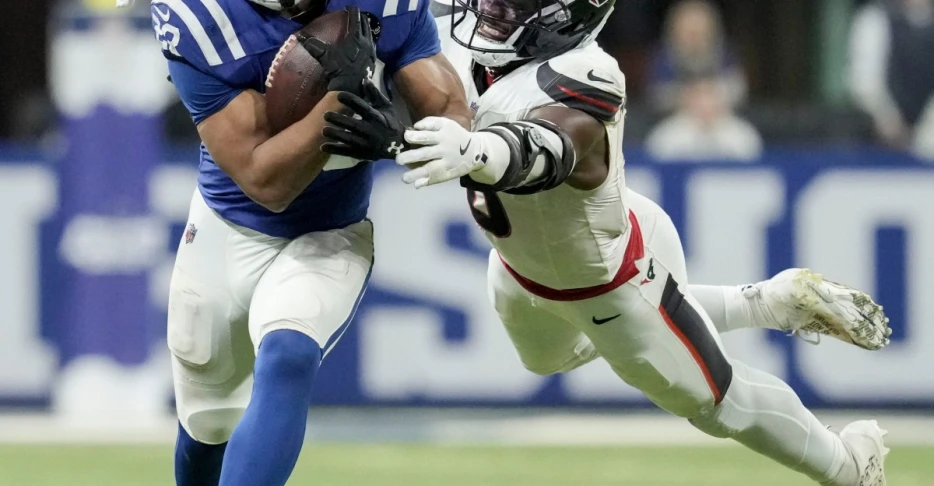
For Indianapolis, the weather almost screams for a Jonathan Taylor-centric game plan. Taylor is a downhill runner who thrives on volume, patience, and defensive fatigue. I’ve written articles this season about him being the closer for the team. Sloppy footing actually works in his favor: one missed tackle, one defender slipping out of a gap, and a four-yard run becomes ten. Repeated carries also wear on a defense’s legs, which is especially important on a wet surface where recovery and lateral movement are compromised. Long, methodical drives don’t just protect the ball; they take oxygen out of the stadium.
The other side of the coin is what rain does to the passing game. Timing routes are harder to hit. Vertical shots turn into coin flips. Pressure gets home faster when linemen can’t anchor. Defenses don’t have to blanket receivers when conditions already limit precision. In that environment, dropping back repeatedly invites disaster: sacks, fumbles, tipped balls, or one mistake that tilts the game. Even quarterbacks playing “well” statistically can lose control of the game in a handful of bad snaps.
A wet-field game also places a premium on field position and clock control. Punting doesn’t hurt as much when drives are hard to sustain. Pinning an opponent deep becomes valuable when explosive offense is harder to sustain. Every three-and-out feels heavier because stringing together long drives is more taxing. That style of game rewards patience, discipline, and physical dominance — traits that don’t show up in highlight reels but decide ugly road games.
For Shane Steichen, this isn’t just a weather adjustment — it’s a coaching test. Weather removes excuses. There’s no...